Seeking Consensus on Biodiversity Priorities
How can key stakeholder organisations find a common approach and standard for deciding on biodiversity priorities?

A common approach to biodiversity priorities
In 2020, governments will agree on a new global biodiversity framework for the next 10 years. How can key stakeholder organisations find a common approach and standard for deciding on biodiversity priorities, share guidance on mapping biodiversity priorities, and agree on a global map of biodiversity priorities as a basis for development planning?
Seeking consensus on biodiversity priorities is a United Nations Environment World Conservation Monitoring Centre (UNEP-WCMC) initiative supported by the Luc Hoffmann Institute in its ideation, incubation and acceleration, with important inputs from over 10 further partners, including the National Geographic Society (opens in a new tab), the NatureMap consortium (opens in a new tab), and the biodiversity hub of the Science-Based Targets Network (opens in a new tab).
Programme timeline
April 2021
Acceleration
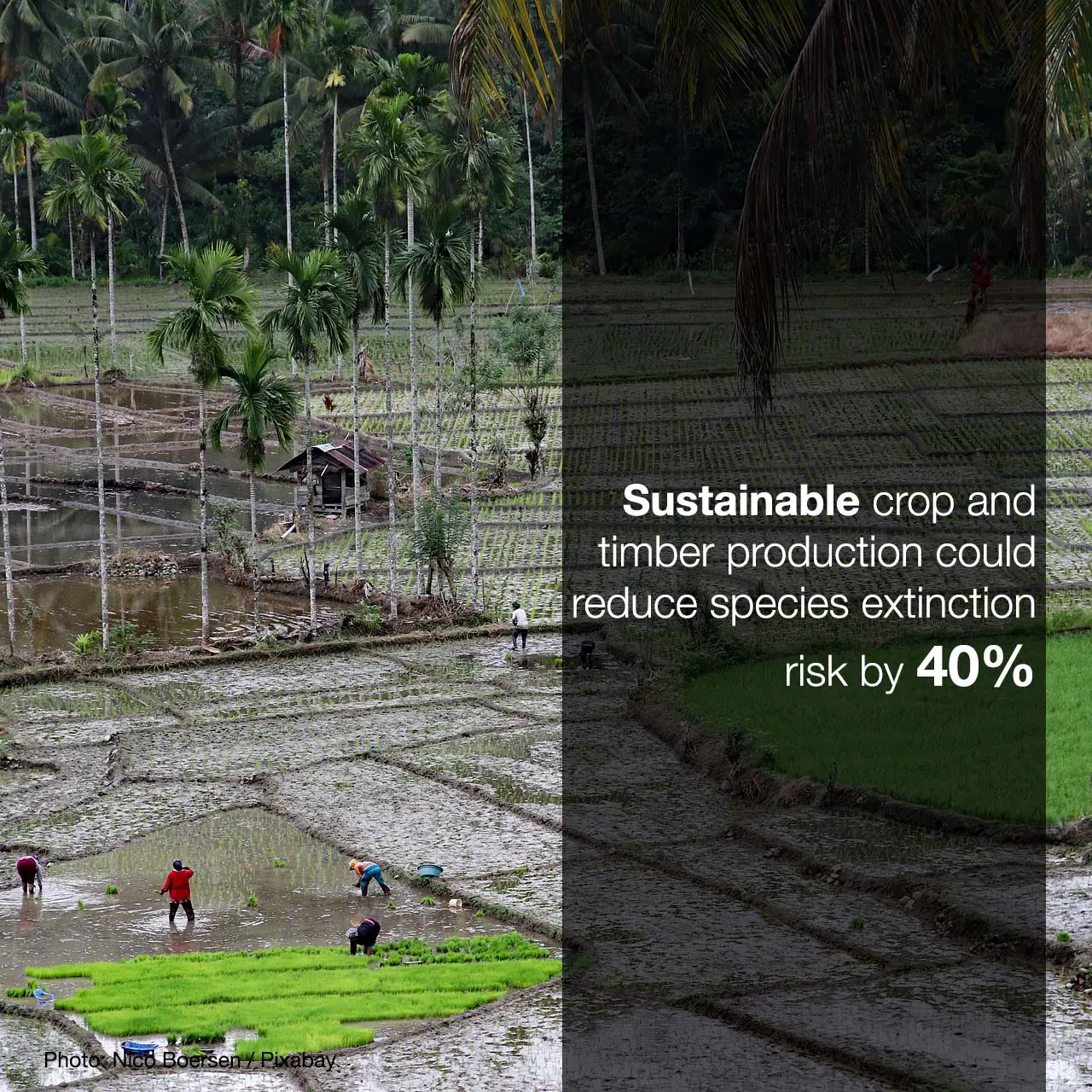
An article published in Nature Ecology & Evolution outlines an innovative way to measure progress in nature conservation and sustainable development. ‘STAR’, as the metric is called, could help the Convention on Biological Diversity’s post-2020 Global Biodiversity Framework measure progress towards species restoration. It is co-authored by Jon Hutton, WWF International Global Conservation Director and former Director of the Luc Hoffmann Institute.
November 2019
Acceleration
To contribute to relevant global decisions and policy-making, the 2017 and 2019 convening workshop findings are summarised in two separate reports, available on the UNEP-WCMC post-2020 page. The findings notably supported the November 2019 meeting of the Convention on Biological Diversity (CBD) Subsidiary Body on Scientific, Technical and Technological Advice, a cradle for the development of the post-2020 global biodiversity framework.
September 2019
Acceleration
Out of ideas and approaches developed in the 2017 and 2019 convenings, including global biodiversity maps to support advocacy and implementation, the NatureMap Consortium creates Nature Map Earth to help governments operationalize targets for biodiversity conservation and restoration.

May 2019
Incubation
The Luc Hoffmann Institute co-creates the design of and supports a convening hosted by UNEP-WCMC entitled ‘Gaining Consensus on Spatial and Temporal Metrics for Informed Decision-making’. The Luc Hoffmann Institute and UNEP-WCMC make the workshop synthesis report available to support negotiators in the development of the post-2020 global biodiversity framework.

June 2017
Ideation
The Luc Hoffmann Institute convenes, together with UNEP-WCMC and financial support from the Leonardo DiCaprio Foundation, a diverse range of scientific, practitioner and policy experts and institutions to discuss how to establish the scientific basis for scaling up area-based conservation in a post-2020 strategy. The convening brings key players with different views and values together for the first time, and fosters considerable understanding, good will and the intention to take the idea forward.