From Reframing to Reimagining. Together.

- Programme
What does regeneration mean?
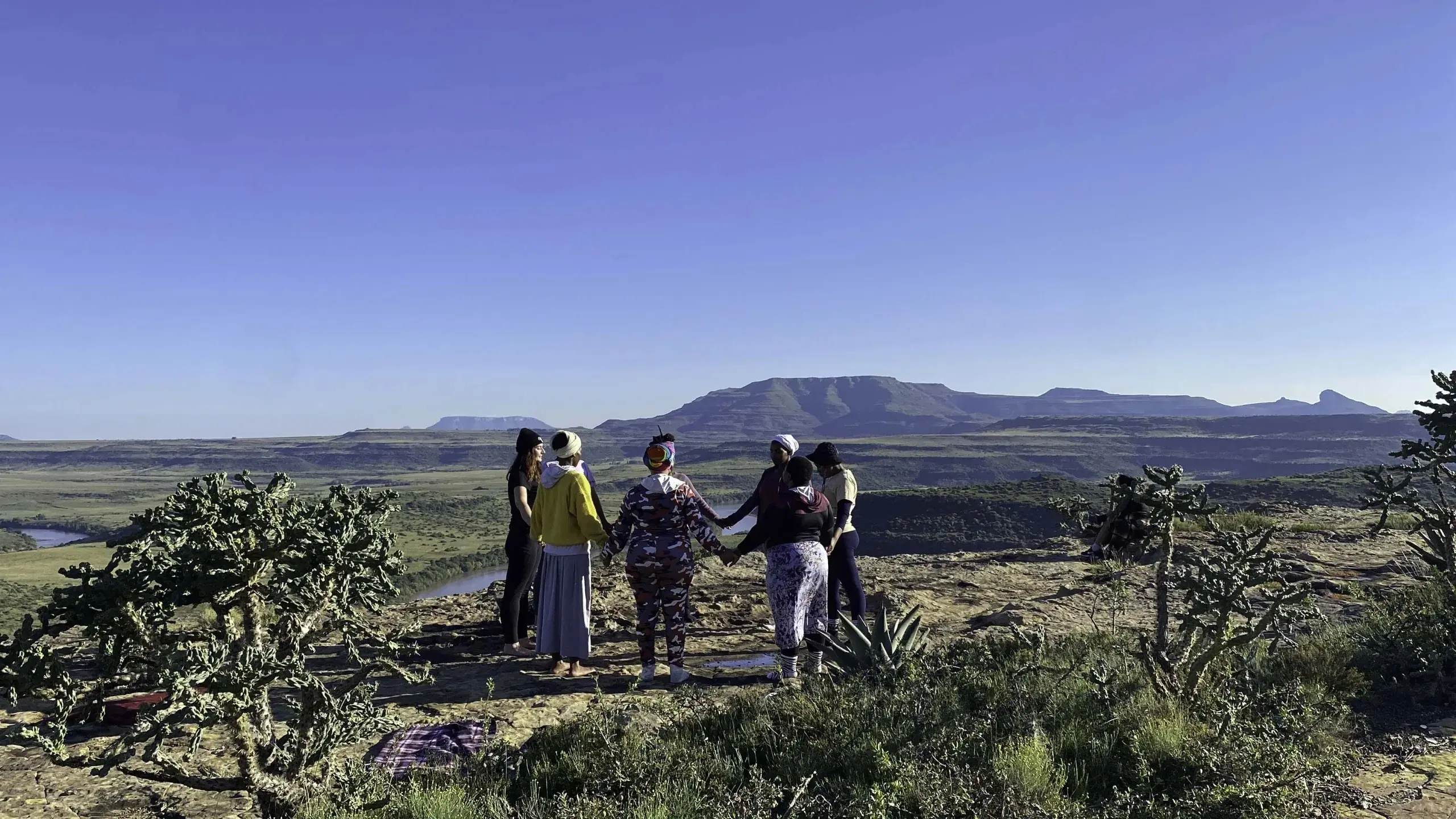
In 2024, as part of the Regenerative Futures programme, Unearthodox embarked on a year of deep listening, questioning, and unravelling a multitude of regenerative perspectives from around the globe.
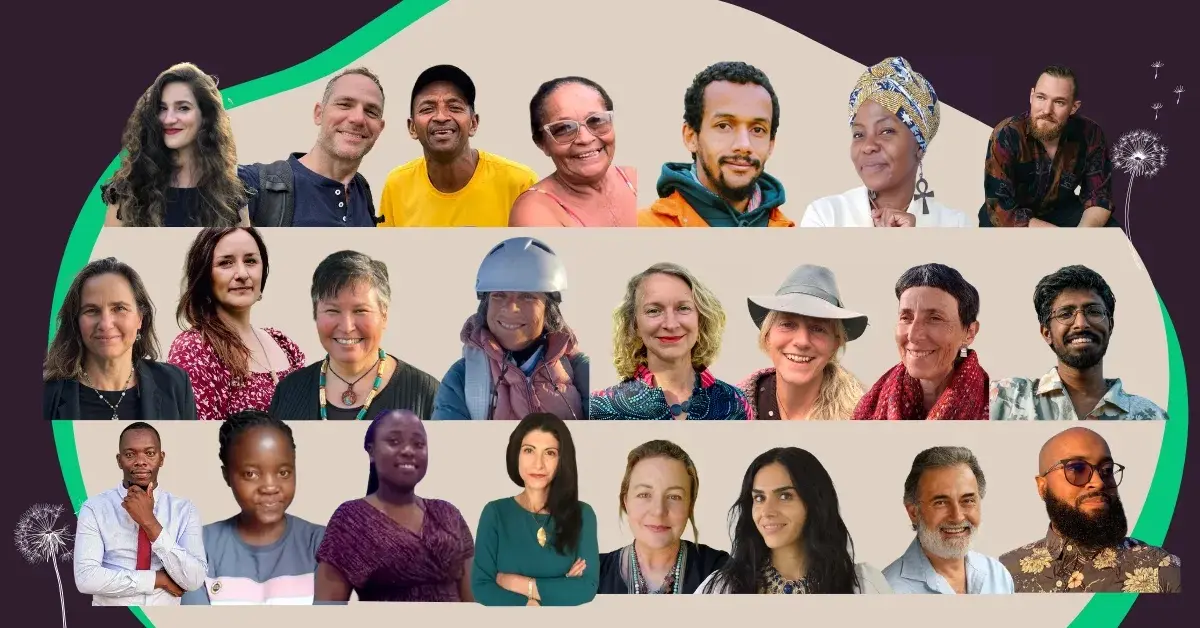
This was not just a research initiative. It was a collective act of emergence. We engaged with over 500 voices - from artists, Indigenous knowledge holders, conservationists, to foresight practitioners, economists, farmers, activists, and systems thinkers - coming from institutes, NGOs, and academia. Together, we surfaced answers to the question “What does regeneration mean?”
By creating multiple access points for engagement - storytelling, art, music, poetry, science, and immersive dialogue - we enabled more voices to contribute beyond traditional expert-led processes and mainstream narratives.
What follows are the echoes of this reframing year, a chorus of tensions, lived experiences, and invitations. Enter gingerly. Let your thoughts linger. Allow a piece of work to both disturb and delight you. Follow the stories that resonate. Add your own.
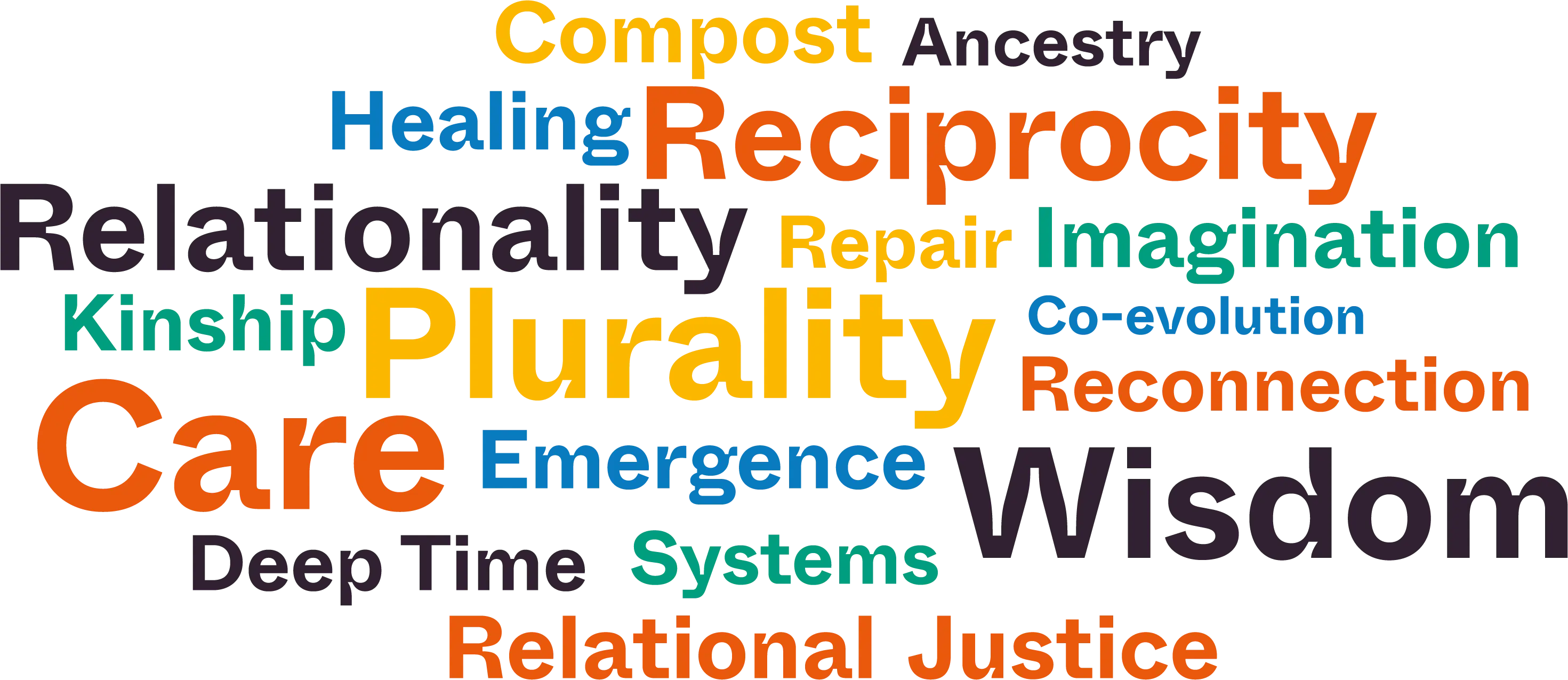
“As I have learned from Elders, Youth and other knowledge keepers we've had the opportunity to work with on the Reconnection Vision, regeneration means the restoration of healthy relationships - with all parts of ourselves, with each other, with the land.”
“In my delta village, decay and rebirth are one. The rotting stalk feeds the next crop. That is regeneration.”
"Regeneration is the spark that moves us from chaos to creativity — from loss to living story."
“Regeneration to me is learning to see the more-than-human world as kin, not resource.”
“Regeneration is not just practice but stewardship — a commitment to tend what was harmed, so life can return in many forms.”
“We breathe the breath of the trees, regeneration is knowing that each breath binds us to all life.”
“Regeneration is a verb — we imagine otherwise, so we can act otherwise.”
"Regeneration is not only practice — it is ancient wisdom that is inherent in nature and within us."
“Regeneration is the default mode of life. One species, human beings, has forgotten it.”
"Regeneration is about learning to live in a healthy symbiosis with nature — restoring what makes life possible."
"Regeneration asks us to shift from industrial logic to a holistic socio-ecological systems logic — seeing humans and nature as one interdependent whole."
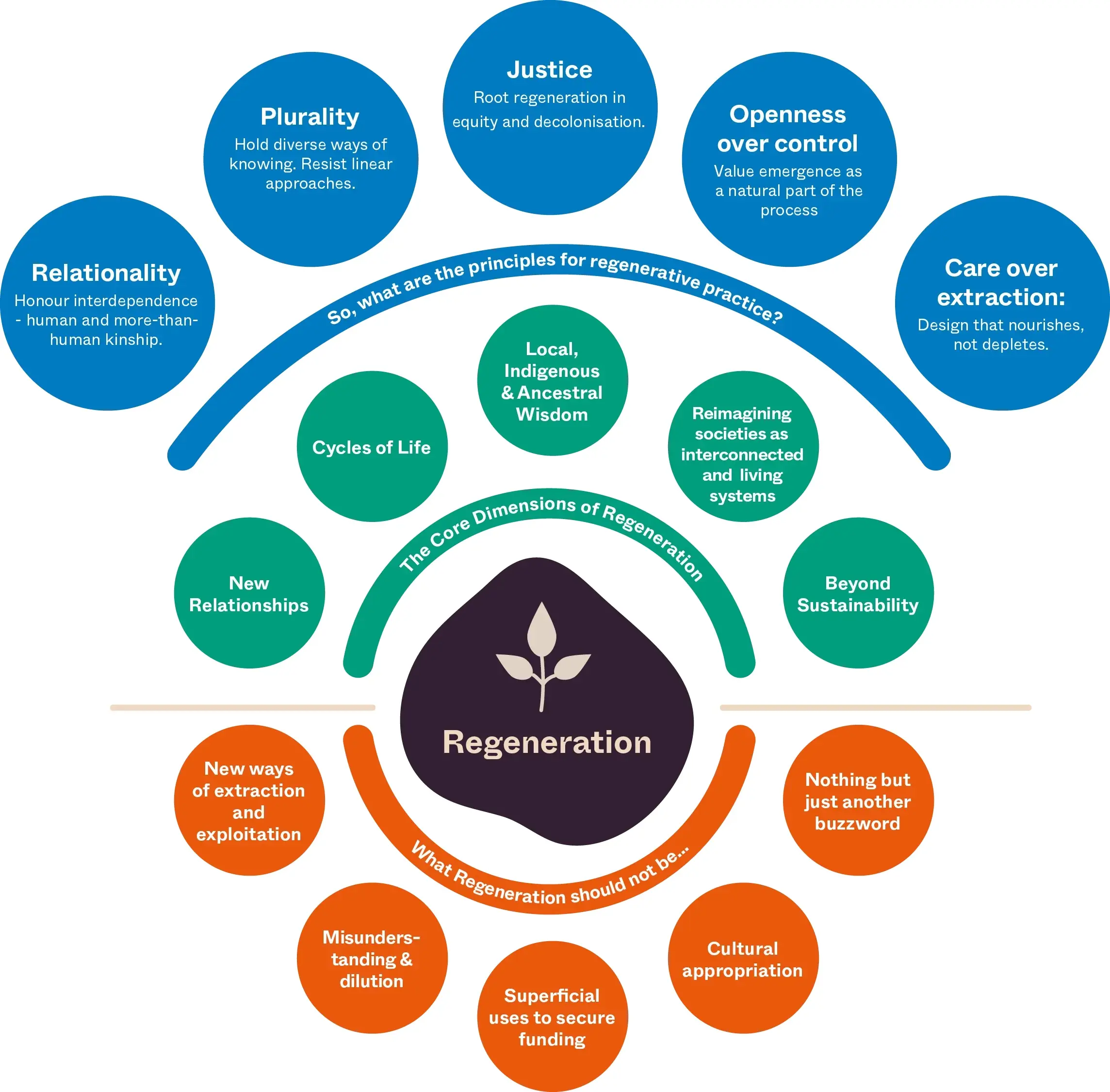
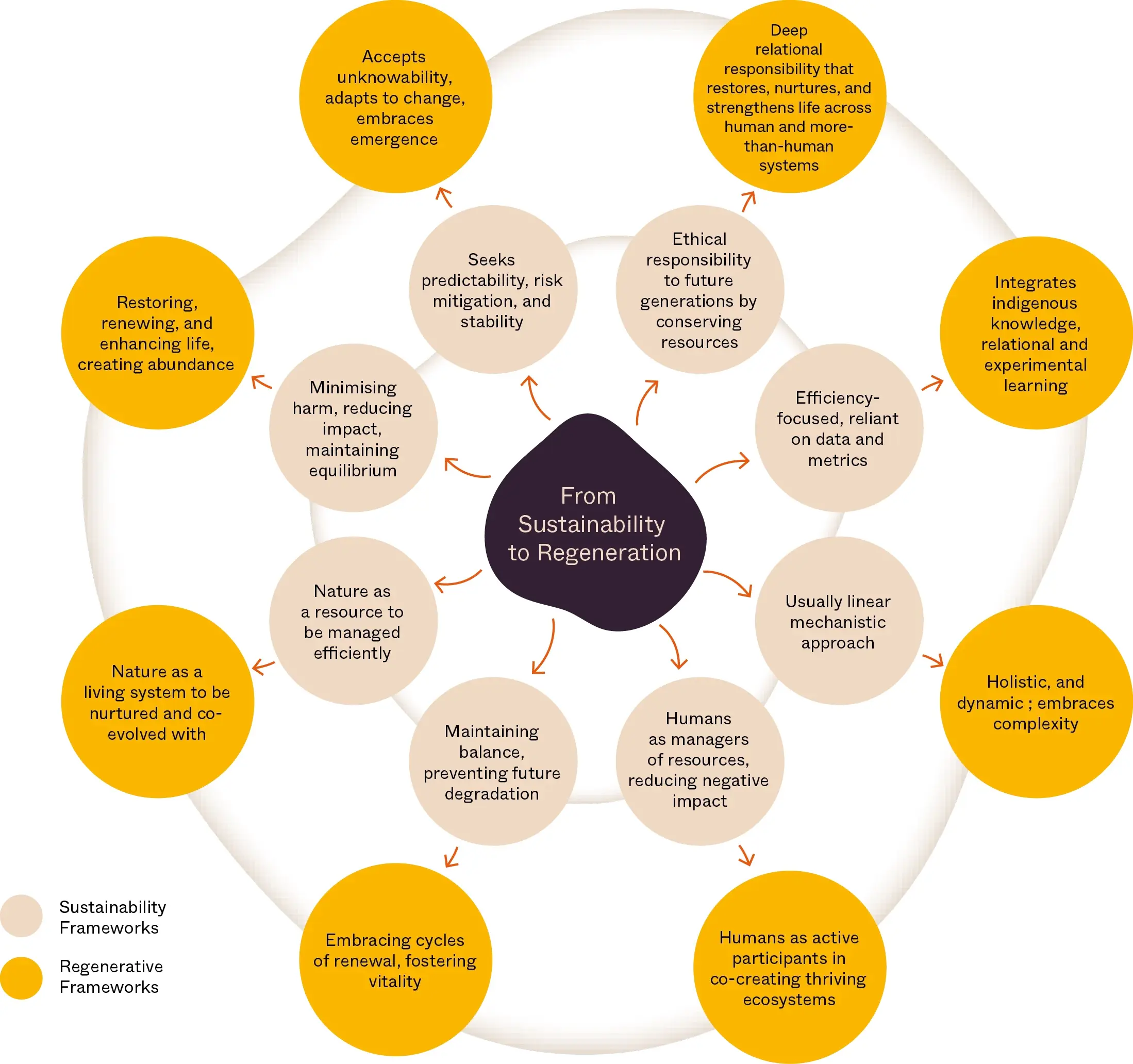
The Core Dimensions of Regeneration
What Regeneration should not be…
Our conversations also uncovered deep concerns, not about regeneration as a concept, but about what it might become if not rooted in the principles and values.
The ‘Tensions’ Shaping Regenerative Thinking
Our year-long inquiry into the concept of regeneration also surfaced “tensions” - not barriers that need instant fixing, but paradoxes that shape how regenerative practices are executed. These tensions are not new; they echo the polarities and dilemmas that many in the systems thinking field continue to grapple with today. Polarities can be generative when acknowledged. Many innovations arise not by resolving a polarity, but by living with it. It is often in the space between opposites that new patterns, practices, and possibilities emerge.
Tensions remind us that regeneration is not always a linear process but a living practice of navigating contradictions. Here are eight of these tensions that we are focusing on.
Holding these tensions, for Unearthodox, means staying aware of how a regenerative idea can respond to both ends of the polarity.
So, what are the principles for regenerative practice?
Relationality: Honour interdependence - human and more-than-human kinship.
Plurality: Hold diverse ways of knowing. Resist linear approaches.
Justice: Root regeneration in equity and decolonisation.
Openness over control: Value emergence as a natural part of the process.
Care over extraction: Design that nourishes, not depletes.
Conclusion
To sum up, what we have learnt is that regeneration is not something we just sustain, it is what we remember, embody and practice daily for life to flourish.