The Future of Conservation NGOs: Seeking innovative ideas for transformative change
- Programme
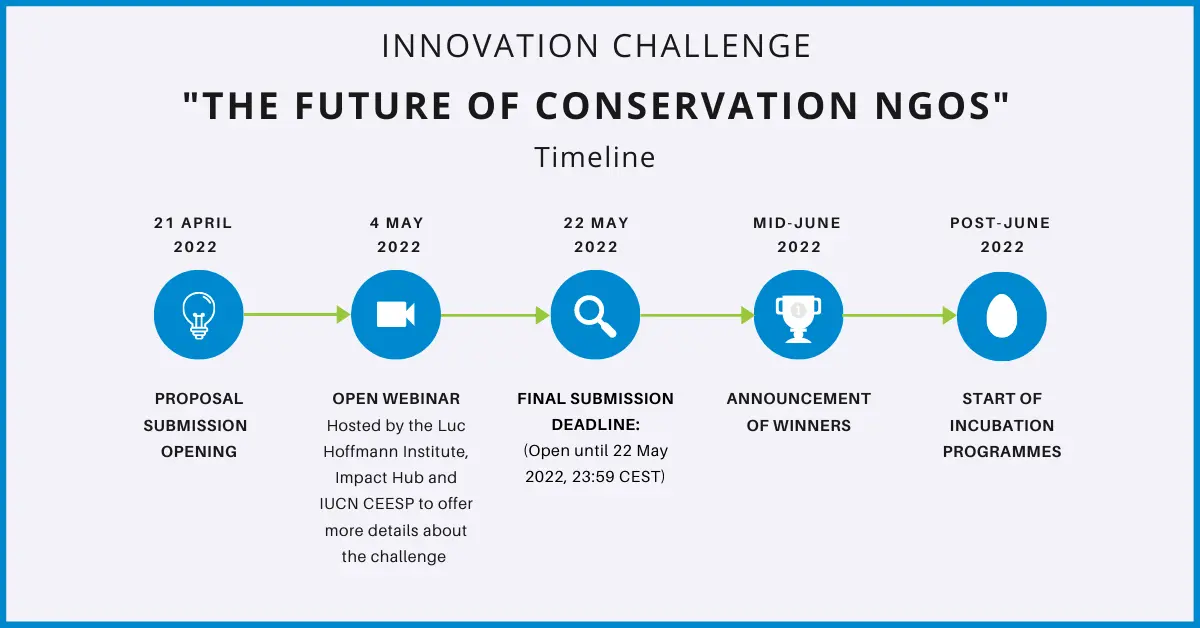
Thank you for your interest in The future of conservation NGOs Innovation Challenge. Applications are no longer being accepted, and the challenge is now closed. The application period ran from 21st April – 22nd May 2022.
We are pleased to announce the winners of the global innovation challenge. Nine innovative ideas have been selected that are challenging dominant conservation narratives, redesigning conservation approaches and reimagining the conservation space to create a more just, equitable and regenerative future. The winning ideas represent a wide array of conservation efforts – international, local, rural, and urban – from the coastal communities in Maldives to the urban population in Greece.
Click here to see the list of winning ideas.
The Luc Hoffmann Institute, the IUCN Commission on Environmental, Economic and Social Policy (opens in a new tab) (CEESP) and Impact Hub (opens in a new tab) are launching a global challenge to drive innovation and support solutions that proactively address the deep-rooted issues facing conservation non-governmental organisations (NGOs) and help build a just, inclusive and regenerative future.
Participants have the chance to win:
- €5,000 per winning entry
- A place in a tailored incubation and co-learning programme
- Access to a community of conservation practitioners, fellow change-makers and potential investors.
What is the challenge?
As the climate crisis intensifies and biodiversity loss accelerates, the work of nature conservation organisations is becoming increasingly urgent.
The scope of conservation too is widening. The conservation agenda, traditionally determined by environmental drivers, is now confronted by the human and social rights agenda and drivers such as inclusion, race, and equity.
Structural and systemic issues are at play within the sector, which are impacting conservation effectiveness. There is an urgent need for root-reform - dismantling existing power structures, addressing legacies of discrimination, equalising voices and resources, reframing narratives and challenging the approaches and structures that perpetuate existing social and economic inequalities.
Where is change needed?
Four broad themes, identified collectively through the Luc Hoffmann Institute’s initiative "The future of conservation NGOs", provide a guide to where change is most needed.
Four Key Themes for Change
Redesign the operational, financial, and governance models.
Challenge dominant Global North narratives, embrace different and plural voices & knowledge.
Dismantle racist and discriminatory structures, decolonise conservation practices.
Embrace a more inclusive approach, collaborate & engage with a diverse range of actors.
In this challenge, we are looking for ideas that will help address these themes, but also welcome ideas that may not fit directly under them.
The Luc Hoffmann Institute’s recently published report, “Exploring possible futures for conservation NGOs”, proposes ideas on how conservation NGOs can shift towards possible new roles, each idea filtered through a lens that captures our fast-changing world.
Get inspired by the 15 innovative propositions of possible conservation futures in the report.
What are we looking for?
We are seeking problem-solvers using innovative methodologies to address deep-rooted issues and bring together solutions for a just, inclusive and regenerative future.
Innovative and actionable ideas or prototypes:
We are inviting submissions from anyone, from any sector, experience or background, with a vision for the future of conservation practices and an idea that can challenge the existing approaches, structures and narratives that are adversely impacting conservation effectiveness. These might include new business model innovations, partnerships, networks, structures and/or tools and tactics.
Solutions-driven concepts:
The ideas must proactively address the deep-rooted issues, challenges and questions facing conservation NGOs and impacting conservation effectiveness.
From idea to scale-up:
We welcome concepts at all stages of development, from ideation through to prototyping or beginning to scale.
Guiding principles
Diversity, intersectionality and social equity should be guiding principles for all successful ideas.
Featured examples
The examples spotlighted below are innovatively addressing the challenges facing conservation NGOs. We hope they serve as inspiration for the type of solutions this challenge is seeking.
Ecoversities is reimagining higher education. It is challenging the status quo and seeking to transform the education system by decolonising pedagogies and embracing local knowledge systems and learning practices.
It aims to restore and re-envision learning processes that are meaningful and relevant to the call of our times.
Colectivo amasijo is a women-led collective that rises from the will to care, conserve, and celebrate. The collective listens to the narratives of women close to the land - non-dominant narratives - and enables ways to share, learn, and relate.
They are redesigning conservation work by creating conditions to actively reflect on the origin and diversity of food, de-hierarchizing knowledge and focusing on “doing” (haceres) as a way of learning.
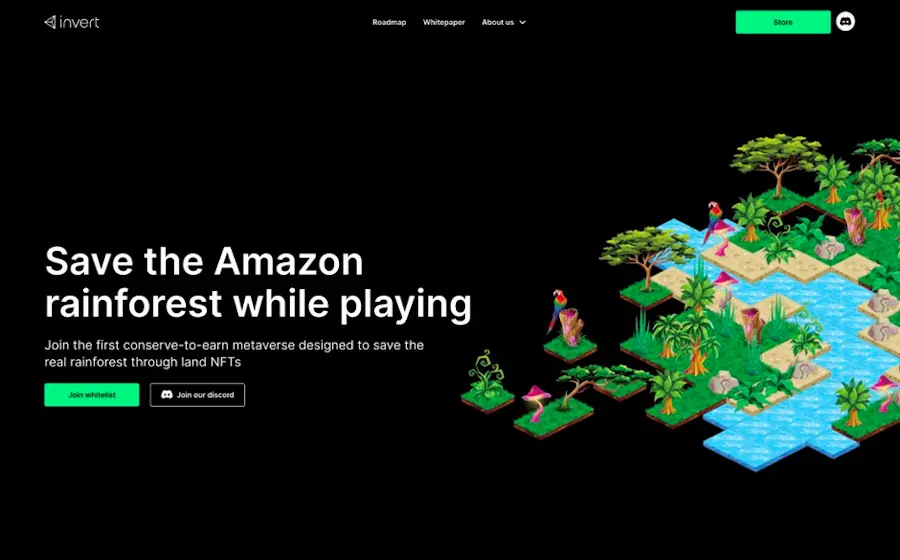
Invert is a Web3 platform developing forest conservation solutions at scale via decentralized technologies, such as NFTs. It is reimagining philanthropy and fundraising models by gamifying nature conservation.
The idea allows anyone to participate in the ecosystem and join their conserve-to-earn model.
Invert’s metaverse is a digital home for endangered forests where users can play, earn, create and explore while tackling deforestation and creating a better future.
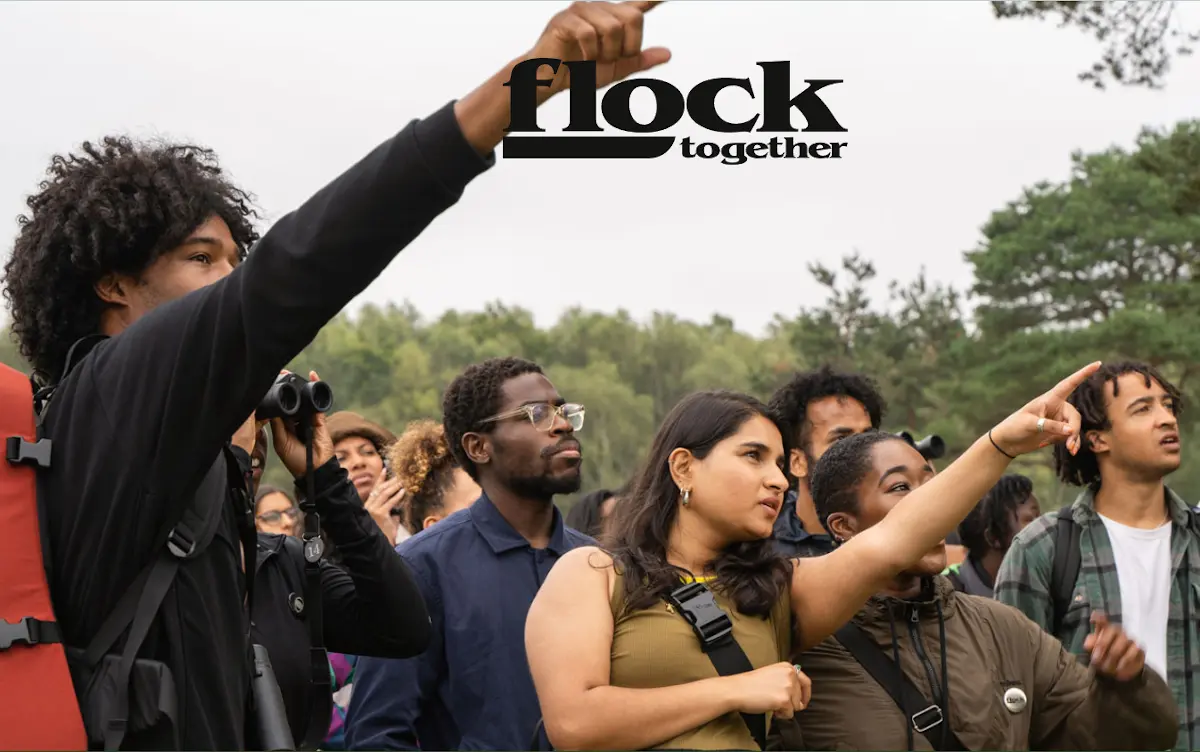
Flock Together is a birdwatching collective for people of colour that enables them to reclaim the green spaces and rebuild their community’s relationship with nature.
These walks are a forum to share experiences, challenge perceptions, find and offer support, and develop a stronger connection to the natural world on their own terms. The walks take place in remote forests and local city parks. They started in London and chapters have opened in Toronto and New York.
Application Details
Timeline
Webinar
On Wednesday, 4 May 2022, we hosted a webinar: The future of conservation NGOs – Innovation Challenge – Seeking innovative ideas for transformative change.
The webinar featured an informational session about the innovation challenge and live Q&A, as well as short inspirational talks.
The speakers:
- Anca Damerell, Head of Programme at the Luc Hoffmann Institute
- Ameyali Ramos, Deputy Chair for the IUCN Commission on Environmental, Economic and Social Policy and the International Policy Coordinator for the ICCA Consortium
- Bruno Lacey, Global Associate at Impact Hub
- Martin Kalungu-Banda, consultant in organisation and leadership development, a facilitator of innovation and change; trainer, coach and author and a social-entrepreneur
If you were not able to attend, you can watch the full recording below.
Questions
Please see the challenge FAQ for more information.
For specific questions about the challenge or the incubation programmes, contact futurengo@wwfint.org.
Terms & Conditions
Read the full project Terms & Conditions.