Winners of the Future of Conservation NGOs Innovation Challenge
- Programme
Unearthodox (formerly the Luc Hoffmann Institute), the IUCN Commission on Environmental, Economic and Social Policy (CEESP) (opens in a new tab) and Impact Hub (opens in a new tab) announced the winners of the Future of Conservation NGOs Innovation Challenge in June 2022. Nine innovative ideas were selected, challenging dominant conservation narratives, redesigning conservation approaches and reimagining the conservation space to create a more just, equitable and regenerative future. Listed below (in no particular order) is a brief description of the winning ideas including the themes that they primarily focus on and the location where they will be piloted/implemented.
Human Nature | Herding 4 Health | Kyklos | Gabon Women's Platform | Ocean Women | Bird's Eye View | Project In/Visibility | RewilDAO
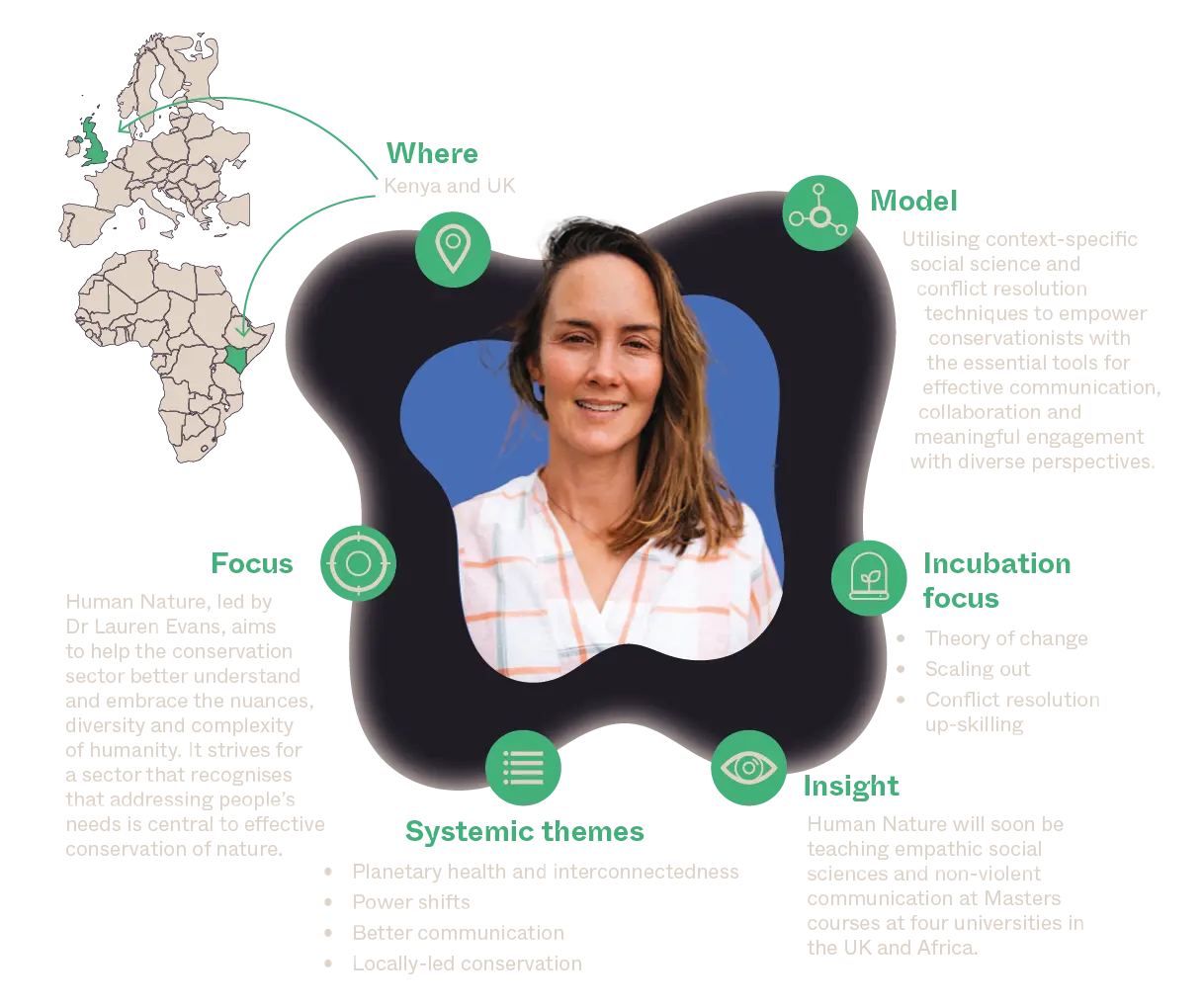
Human Nature
How does this project challenge the status quo?
Human Nature aims to transform conservation practice by supporting conservation organisations to fully engage with and understand the social complexity they are working within. Human Nature aims to create conservation practice that listens to and works with more marginalised voices. To achieve this, Human Nature intends to carry out context-specific social science and conflict resolution and equip conservationists with the tools to communicate, collaborate and engage more effectively with a diversity of voices.
"I was encouraged to take pragmatic steps forward and was introduced to key relevant people in the sector who also encouraged me and validated the idea as being important and attainable. This gave me confidence to turn Human Nature from an idea into reality."
Dr Lauren Evans, project lead
Connect:
LinkedIn Lauren Evans (opens in a new tab)
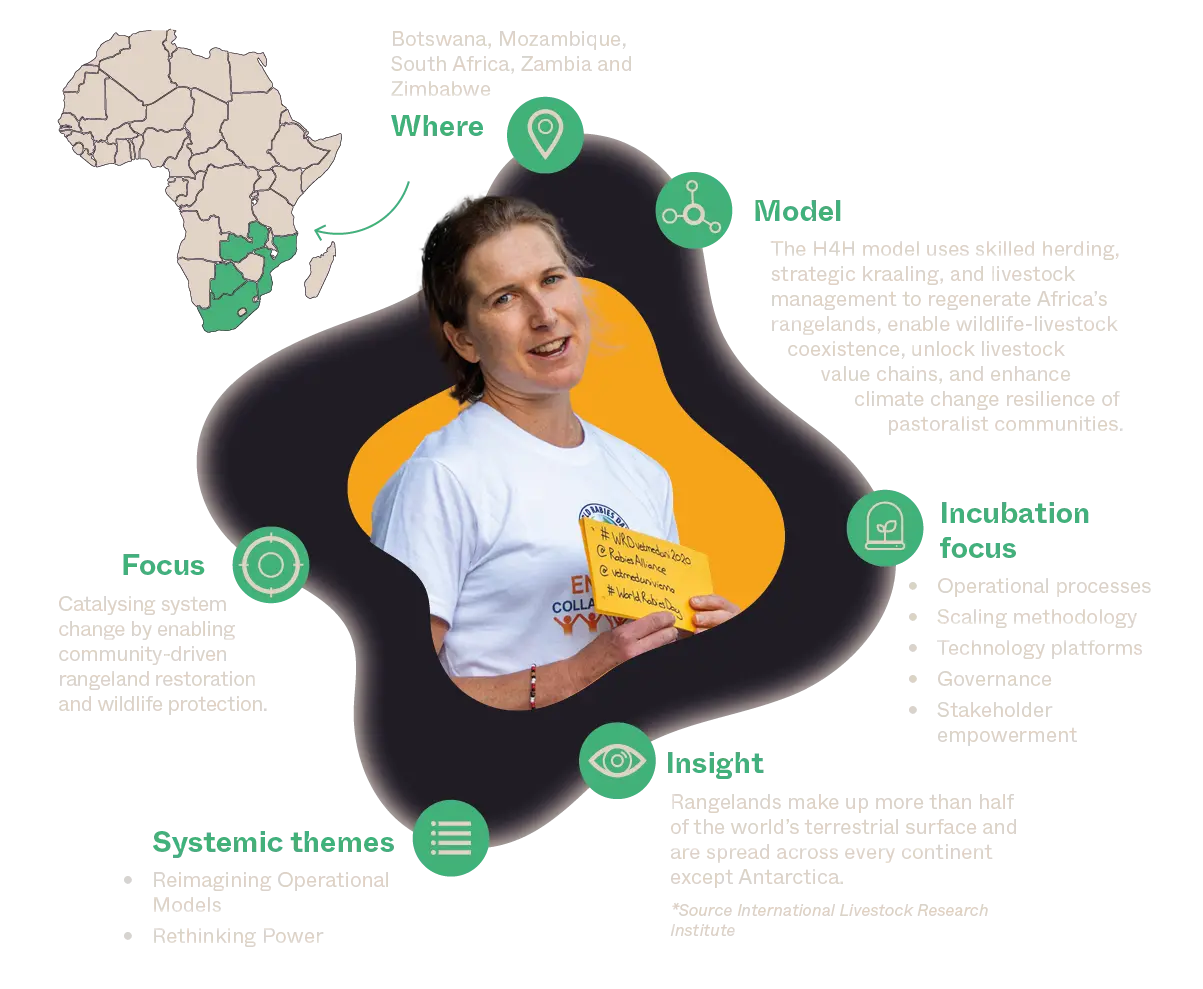
Herding 4 Health (H4H)
How does this project challenge the status quo?
The Herding 4 Health (H4H) project challenges the prevailing exclusionary approach in conservation. H4H recognizes the vital contributions pastoralists make to biodiversity conservation. By incorporating Indigenous peoples and their livelihoods into a holistic conservation agenda, the project seeks to resolve tensions, prevent ecosystem degradation, and break the vicious cycle of poverty traps affecting livestock farmers across Africa.
"Systems-level change will require giving up some control, letting others shine and knowing the right time to step back or step up."
Anna Haw, program manager
Connect:
LinkedIn Anna Haw | (opens in a new tab) Webpage: Herding 4 Health (opens in a new tab)
Kyklos
How does this project challenge the status quo?
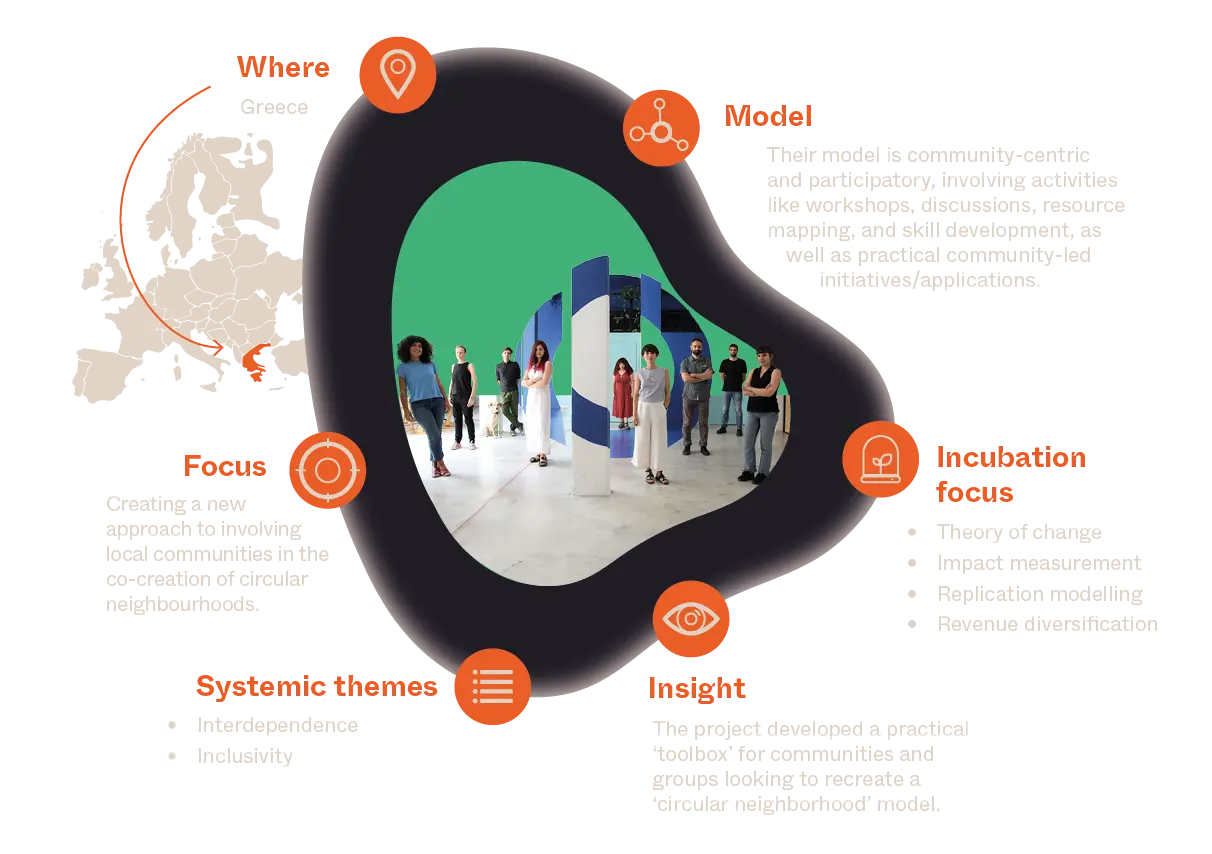
Kyklos is pushing boundaries in urban problem solving by empowering communities through a collaborative, bottom-up approach. The project's goal is to cultivate a shared local mindset that drives shifts in daily behaviours, diminishing reliance on linear production and consumption models.
"True leadership involves modelling ideas and leading by example. Leadership is about fostering community empowerment and facilitating collective change by being an effective coordinator and supporter."
Ilias Papagiannopoulos and Sofia Petridou, project leads
Connect:
Facebook Kyklos (opens in a new tab) | Instagram Kyklos (opens in a new tab)
Gabon Women's Platform
How does this project challenge the status quo?
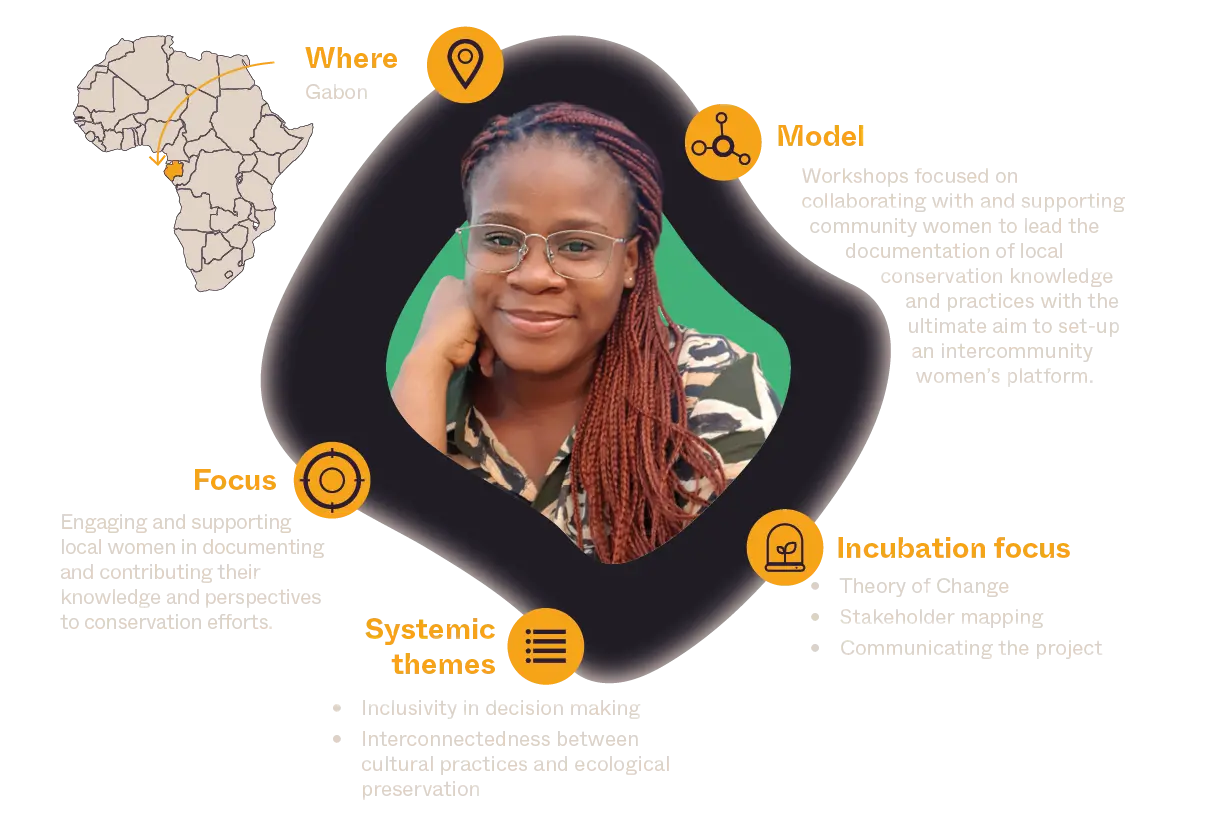
By recognising the strong link between cultural practices and ecological preservation, and valuing local communities for their vital role in biodiversity conservation, the platform offers a more inclusive and holistic conservation approach.
"The incubation programme was a very practical programme. It helped me understand how to map my stakeholders around a project, and how to communicate to potential investors. I was very satisfied with the different presentations and speakers, it was a rich and instructive moment of exchange for me."
Savana Nnang-Obiang, project lead
Connect:
Website: An initiative by NADA (opens in a new tab) | LinkedIn Savana Nnang-Obiang (opens in a new tab)
Ocean Women
How does this project challenge the status quo?
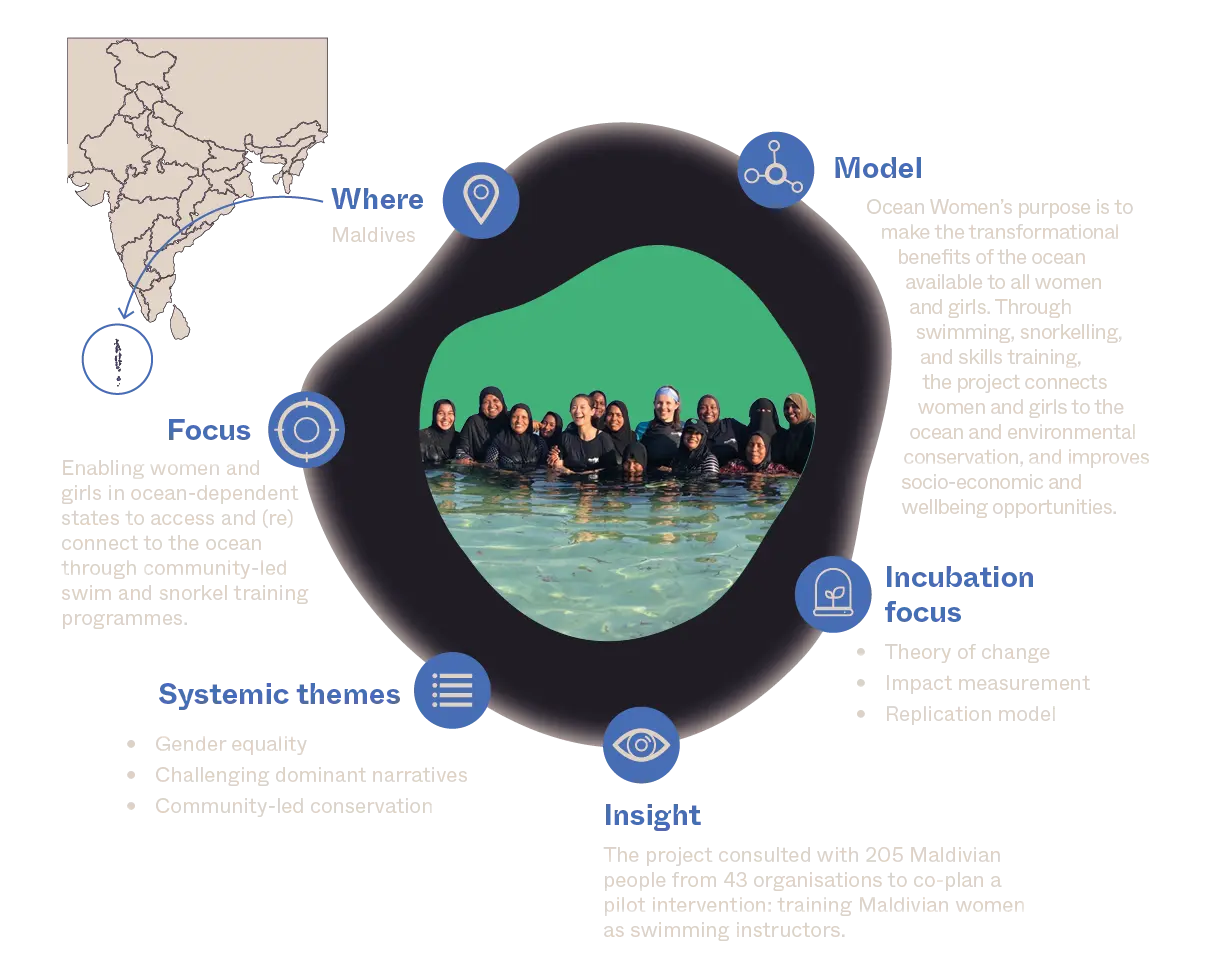
The project acknowledges the importance of engaging all genders for effective and equitable conservation. It challenges the male-dominated narrative in conservation and promotes community-led approaches that value local knowledge and perspectives, breaking from top-down conservation models.
"We want to inspire a more diverse range of people to enter the conservation field."
Flossy Barraud, project lead
Connect:
Instagram Manta Trust (opens in a new tab) | LinkedIn Manta Trust (opens in a new tab)
Bird's Eye View
How does this project challenge the status quo?
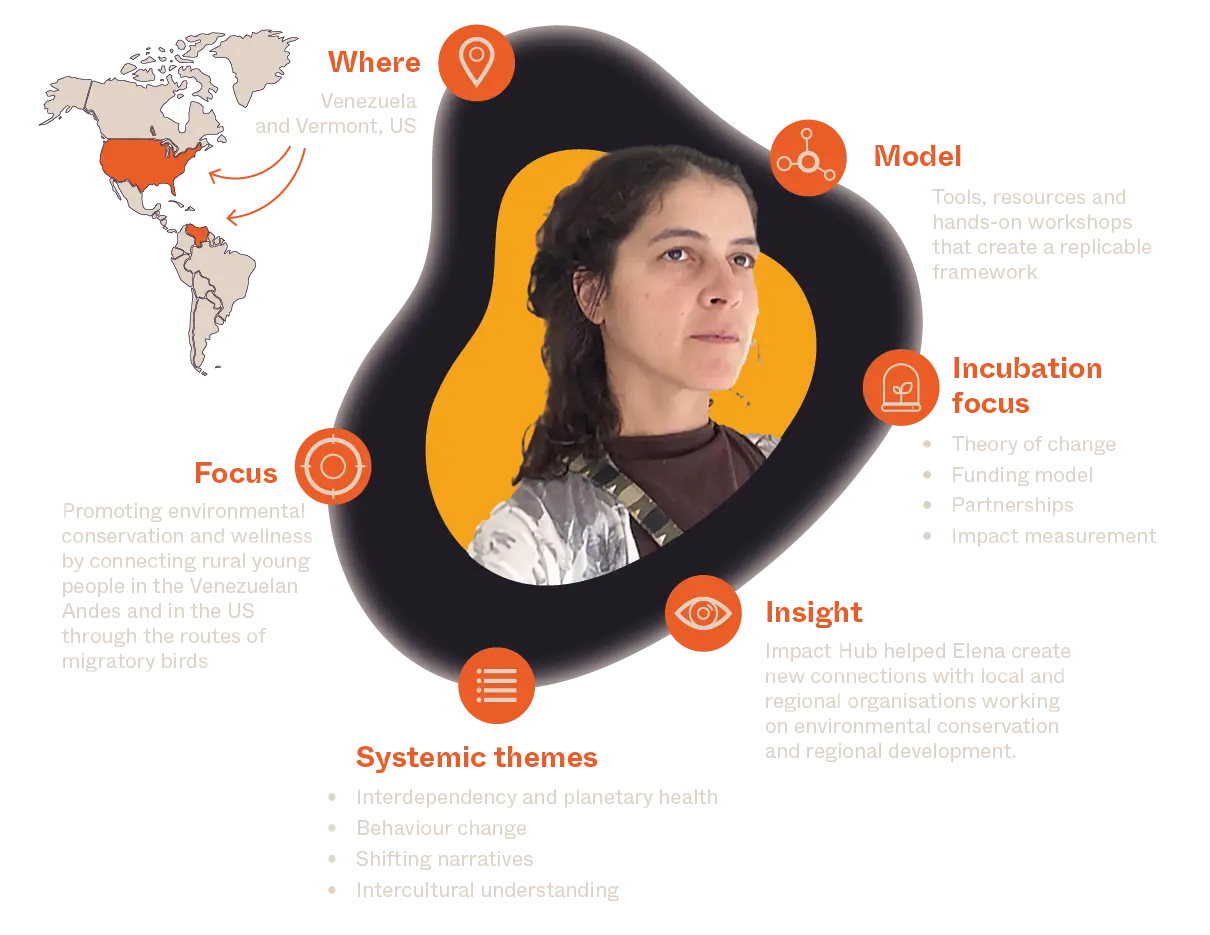
By empowering young people to protect bird flyways through a citizen-science approach, this project disrupts the perception that conservation is solely the responsibility of established conservationists. It also delves into the impact that noticing and interacting with nature can have on people’s mental health and the wider theme of how interdependent conservation work can contribute to a system of planetary health.
“Winning the challenge gave me the credibility to turn the idea into a project.”
Elena Blanco, project lead
Connect:
Instagram Bird's Eye View (opens in a new tab) | LinkedIn Bird's Eye View (opens in a new tab)
Project In/Visibility
How does this project challenge the status quo?
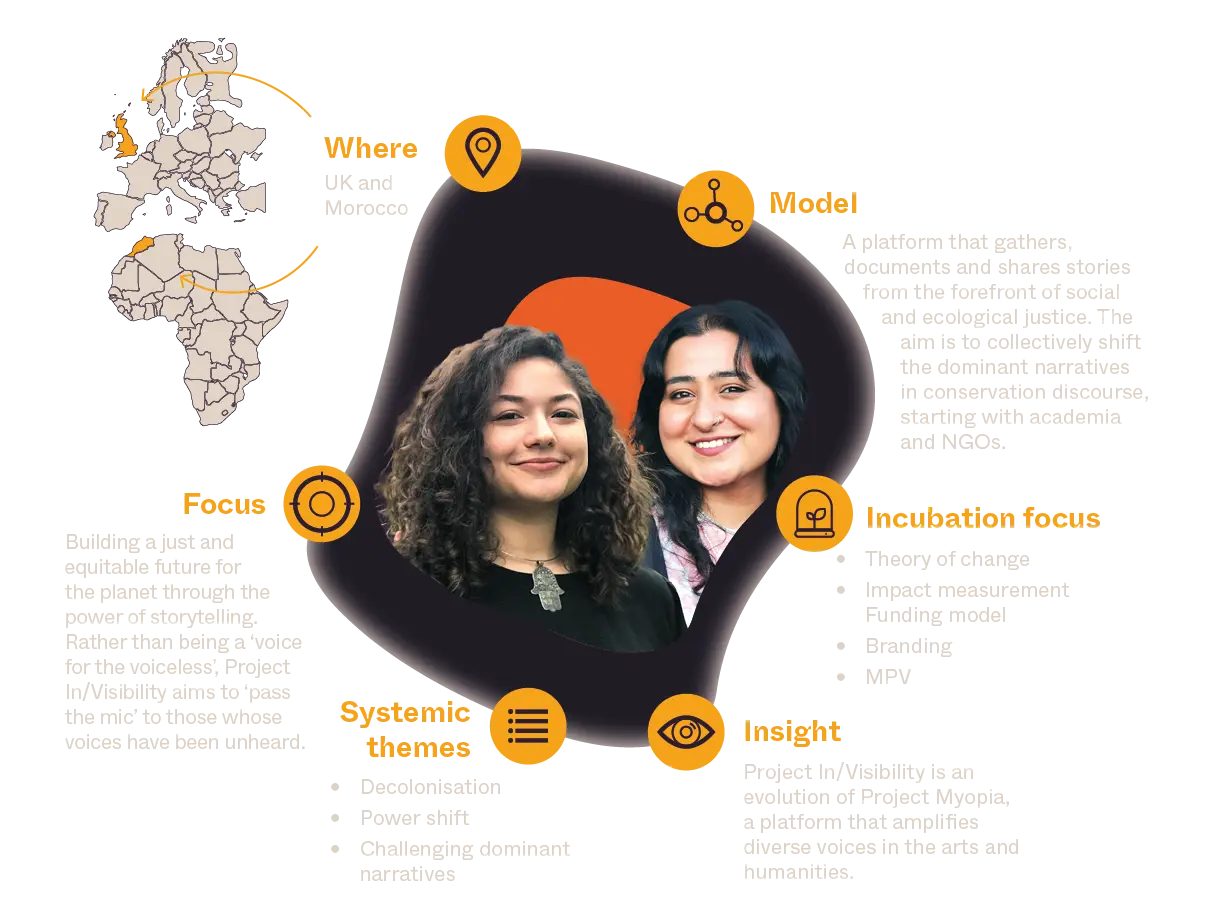
Project In/Visibility seeks to challenge dominant conservation narratives by introducing new perspectives and lived experiences from the very heart of communities, placing them in the spotlight of attention. It aims to establish connections between academia and non-governmental organisations, thereby amplifying the voices that advocate for social and ecological justice.
“We have been positively surprised by how decolonisation and narrative-change is becoming a part of the discourse for conservation NGOs. But these historically-rooted issues run deep and are so difficult to disentangle - it will take time!”
Tasnim Elboute and Samirah Siddiqui, project leads
Connect:
Website Project In/Visibility (opens in a new tab) | Website Project Myopia (opens in a new tab) | Instagram Project Myopia (opens in a new tab)
RewilDAO
How does this project challenge the status quo?
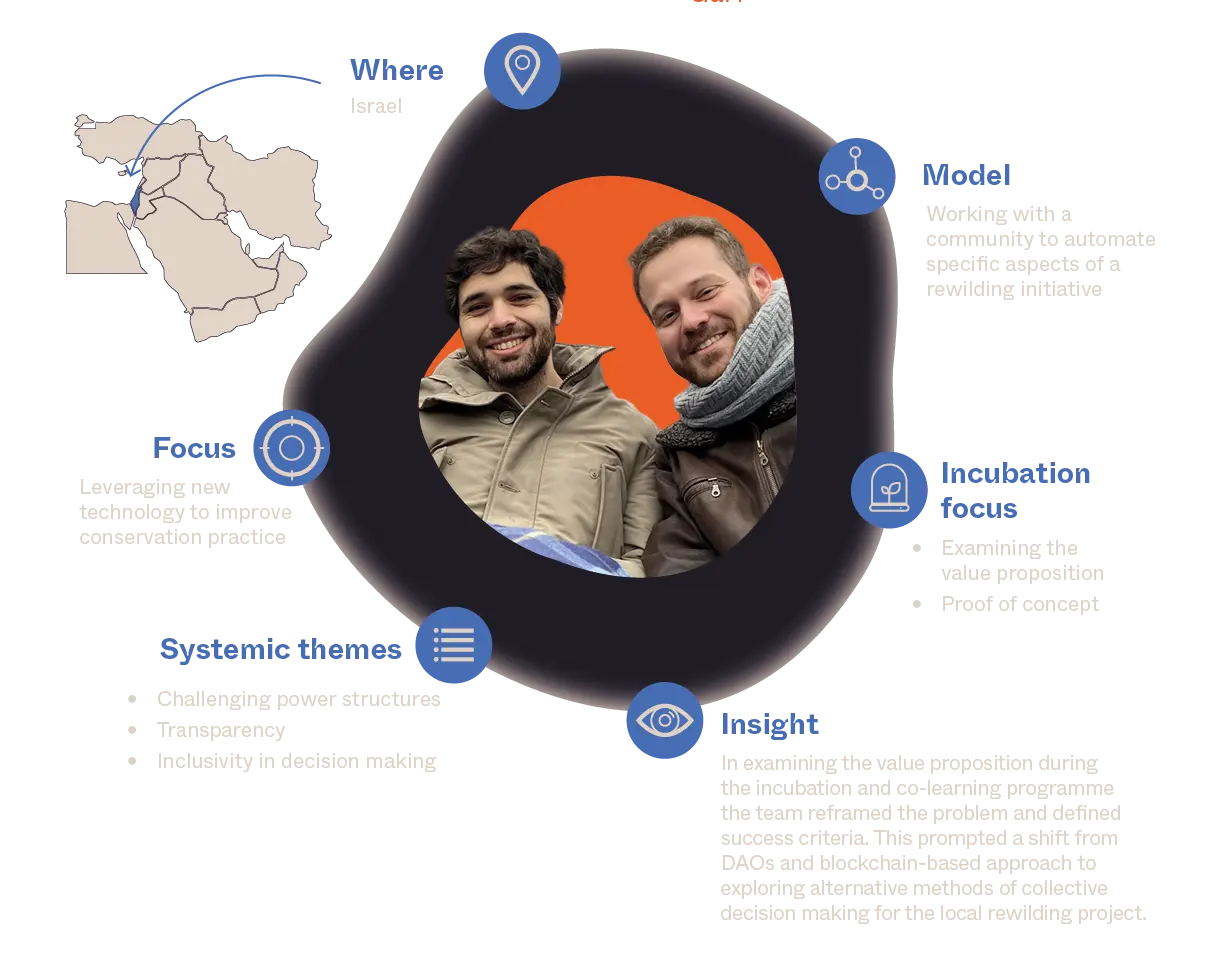
By supporting conservation projects embrace the principles of DAOs (Decentralised Autonomous Organisations) using blockchain technology to facilitate collective decision-making in a self-tailored, transparent, and non-hierarchical manner.
“Thank you very much for the efforts you were putting forward to help us realise our vision! My objective was to refine my entrepreneurship skills, mastering the entire journey from ideation to implementation. I'm pleased to say that I made some progress in this regard, largely thanks to the guidance and wisdom of our mentor, Michelle Chakalakal.”
Gal Zanir and Stav Mushkat, project leads
Connect:
LinkedIn Gal Zanir (opens in a new tab) | LinkedIn Stav Mushkat (opens in a new tab)