Visioning Regenerative Futures: Annual Report 2023

The Future of Conservation NGOs
The Future of Conservation NGOs aimed to reimagine and redesign the future of conservation work and test alternative models better equipped to help build a more inclusive, just and regenerative future. This project sought to drive innovation and support solutions that proactively address the deep-rooted issues facing conservation NGOs.
“The Future of Conservation NGOs significantly shaped my thinking and sparked critical discussions within our organisation about how to approach our new 2030 Strategy.”
Innovation
During the first phase of the Future of Conservation NGOs project, Unearthodox (then the Luc Hoffmann Institute) led a process of deep listening and convened diverse audiences to better understand the changes needed from conservation NGOs to address long-standing societal problems and achieve better outcomes for the planet. Four main thematic areas were identified where innovation could catalyse change:
- Power and Legacy
- Interdependence and Inclusivity
- Communication and Narratives
- Operational and Funding Models
During the second phase of the project, the institute sought to identify the problem-solvers and innovators who are already working to reimagine this space. In partnership with the International Union for Conservation of Nature (IUCN) Commission on Environmental, Economic and Social Policy (CEESP) and Impact Hub, the institute launched a unique global innovation challenge framed around the four identified themes. We received 173 applications from 59 countries from promising innovators who offered new ideas and concrete products, models, methods and tools to transform conservation.
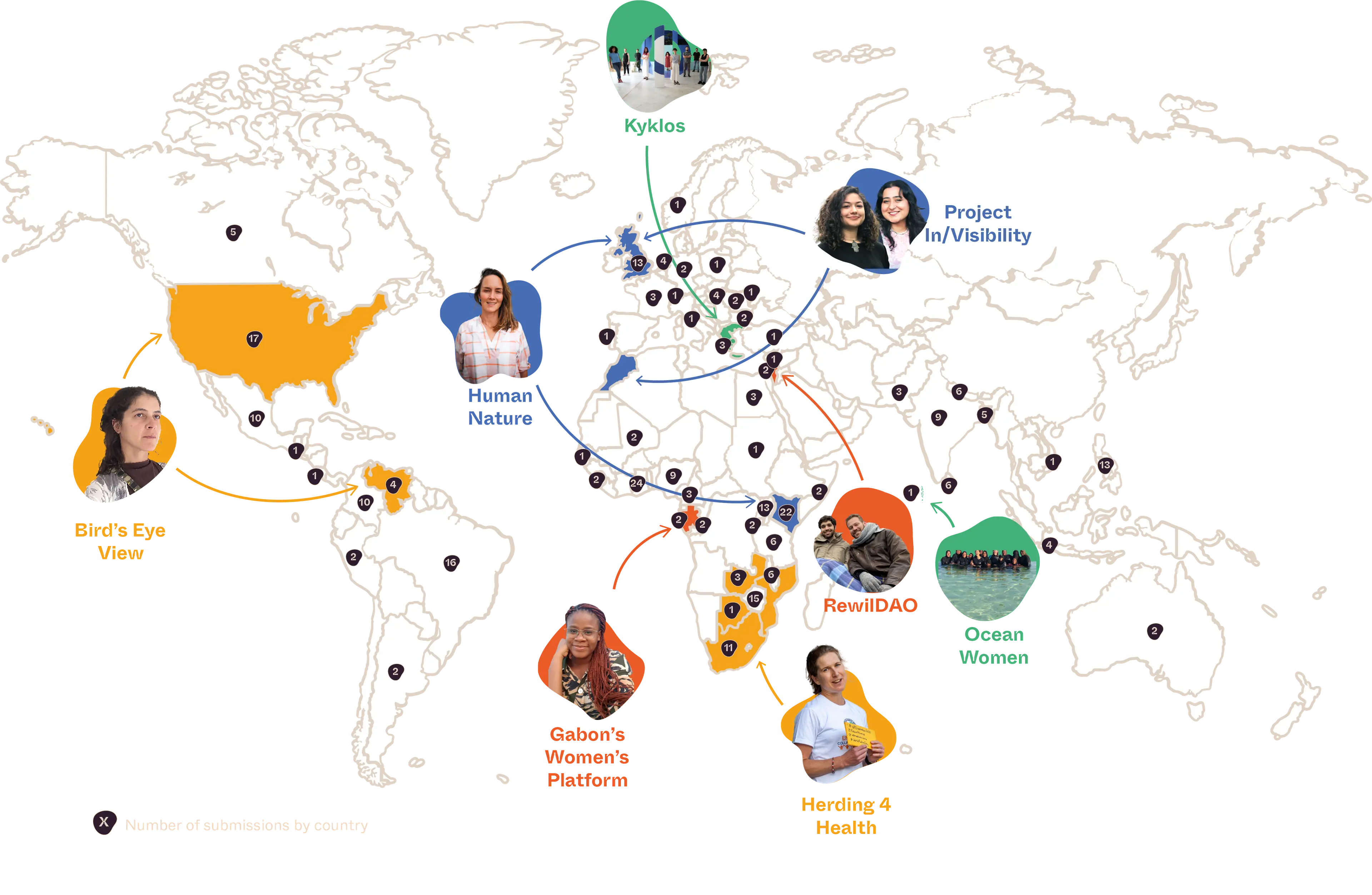
In the final phase of the project, alongside Impact Hub and IUCN CEESP, we led an incubation and co-learning programme for the nine global winners of the Future of Conservation NGOs innovation challenge. These nine winning initiatives, eight of which are women-led organisations, represent innovations on five continents. They challenge dominant conservation narratives, redesign conservation approaches and reimagine the conservation space to create a more just, equitable and regenerative future.
Quotes from participants in the incubation and co-learning programme:
“You have ignited a much-needed flame in the conservation sector. I look forward to seeing this community and movement grow.”
“The programme’s most important contribution has been to foster systemic thinking combined with very hands-on tools for robust design and planning.”
“We have participated in several coaching programmes and this was by far one of the most useful and impactful.”
Milestones and achievements
The first six months of the incubation programme encompassed:
- 16 hours of group workshops
- More than 270 hours of mentoring
- €45,000 in funding
In the second six months of the incubation programme, we focused on working with four of the winning ideas that showed the most potential or could benefit most from the support of Unearthodox and our partners. In this phase we provided more tailored support, including training in non-violent communication methods, expert guidance in fundraising options to scale specific ideas and support to develop brand positioning. Also in this phase of the initiative, we focused on fostering a sense of collective responsibility for challenging the conservation status quo amongst leaders, innovators and practitioners alike.
Outcomes achieved during the second phase of incubation
- Anna Haw, leader of Herding 4 Health (H4H), engaged in various speaking engagements and podcasts to enhance her advocacy and leadership skills and delve deeper into H4H's themes. Notably, her efforts aligned with one of Conservation International's core strategies for 2023, ‘Reimagining Conservation’. She co-hosted a webinar within Conservation International where the Unearthodox team presented their ‘Exploring possible futures for conservation NGOs’ report.
- Tangible growth occurred, such as new contracts for Human Nature, expanded/renewed funder portfolios for Kyklos, and Kyklos being approached by local government for potential collaborations.
- Collaborating with Unearthodox and Impact Hub, Kyklos undertook knowledge sharing with a Circular Neighbourhood toolkit that was distributed to potential partners and organisations in this domain.
- The Global Diversity Network, with support from Unearthodox, secured funding through a Darwin Initiative Grant for a programme of work that involves developing the Project In/Visibility.
During the course of 2023, we presented the Future of Conservation NGOs project to WWF International, Conservation International and students from the MPhil in Conservation Leadership programme at the University of Cambridge. In showcasing the work of four out of nine winners of the innovation challenge, our goal was threefold: to share insights from Unearthodox’s unique systems thinking approach using this project as an example; to raise awareness about root causes impacting the conservation sector; and to inspire action.
Towards the end of 2023, the Future of Conservation NGOs project hosted two conversations during the Unearthodox Learning Festival. We also published the Future of Conservation NGOs resource library as part of the overarching Future of Conservation resource library.
"I was inspired by the other people and initiatives in this project. I learned that we are all in this together – all seeking ways to make conservation more inclusive and impactful. No person or entity may hold all the answers, but if we keep asking questions, learning from each other and holding each other accountable, we can begin to catalyse the necessary global shifts to ensure our valuable ecosystem services are resilient and able to flourish for the benefit of all people."